

Many of the mushrooms foragers seek have a special relationship with a tree type. We love healthy forests and all the awesome mushrooms that grow there. Those hunting for wild edibles often seek out certain types of forests for their quarry. To that end, GeoForager offers a lot of cool forest and tree maps and we plan to continue adding more.
Forest Overlays
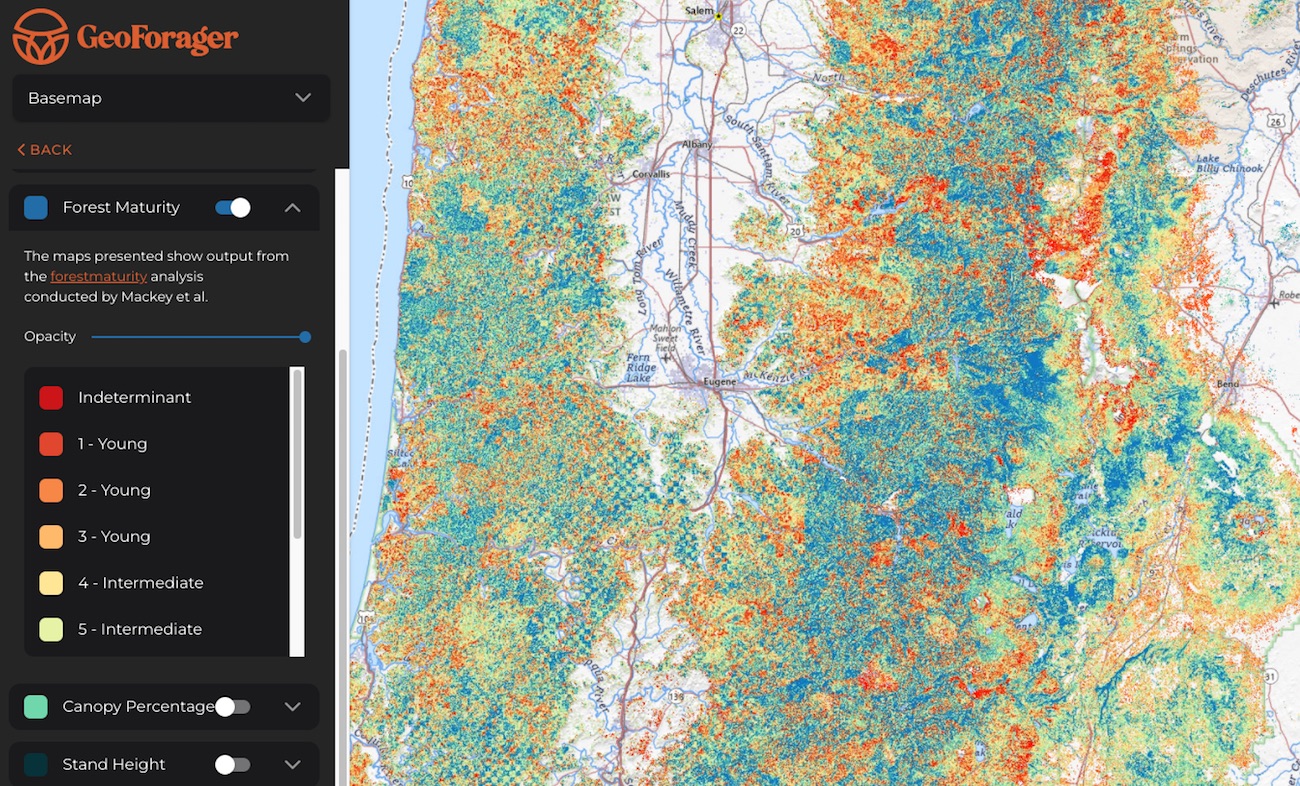
- Forest Maturity: Combines data from several different maps to estimate the maturity of the forest on a scale of 1-10.
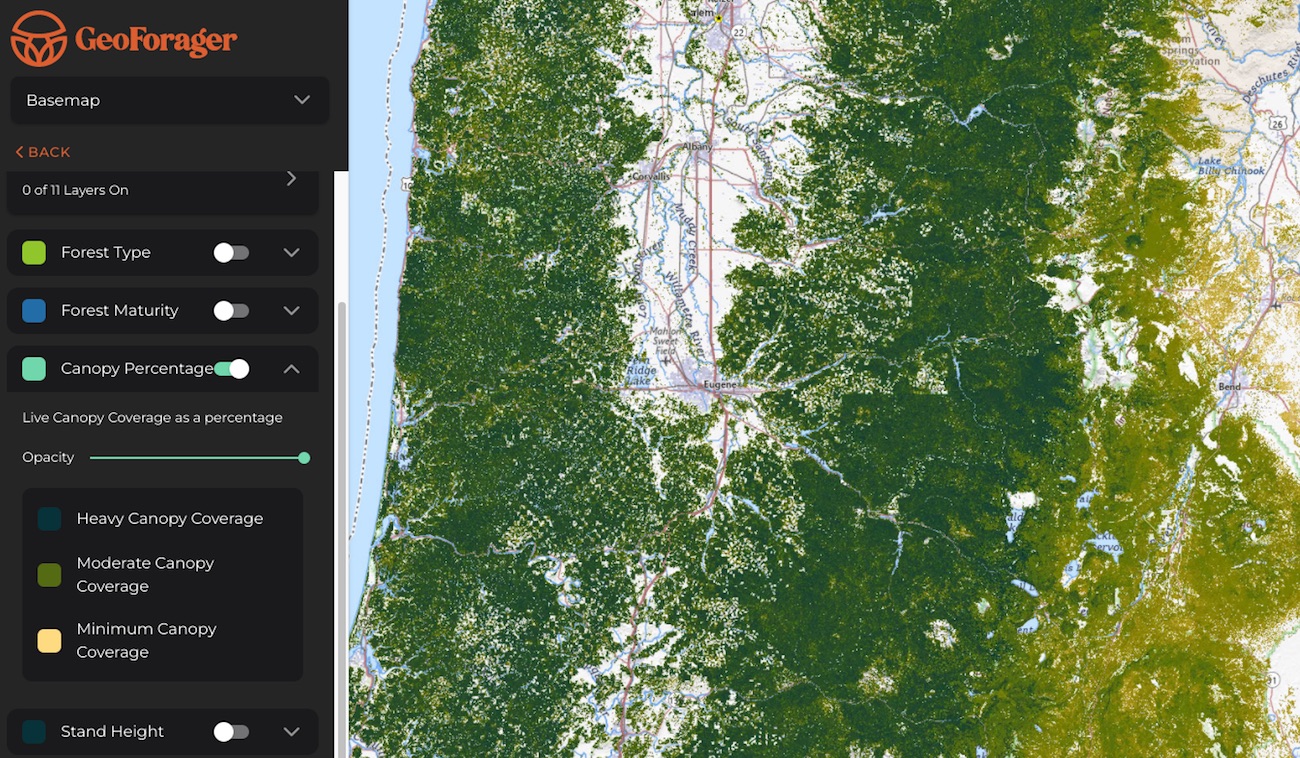
- Canopy Percentage: Displays the canopy coverage on a color gradient to help find more mature, shadier forests.
- Stand Height: Rates forest on a color gradient based on the height of the dominant tree.
- Stand Size: Rates a forest baed on the predominant size of trees, measured as diameter.


Tree Species

GeoForager currently offers about 25 tree species with plans to add more.
Conifer Trees:
- Engelmann Spruce
- Western Red Cedar
- Grand Fir
- Subalpine Fir
- Lodgepole Pine
- Ponderosa Pine
- White Fir
- Table Mountain Pine (Eastern Burn Morels)
- Eastern Hemlock (Reishi)
Deciduous Trees (mostly for morel hunters across North America):

- Green Ash
- White Ash
- Black Ash
- American Elm
- Slippery Elm
- American Sycamore
- Tulip Tree (Yellow Poplar)
- Narrowleaf Cottonwood
- Black Cottonwood
- Pacific Madrone
- Oregon White Oak
- Quaking Aspen
- Eastern Cottonwood
- Paper Birch (for chaga hunters)
Forest Type
Forest type has 28 basic forest types in the map overlay. At a broad level, these forest types can be important to understanding habitat and can help foragers start with high-level information. I often start on this overlay for a 10,000 foot understanding of an area.
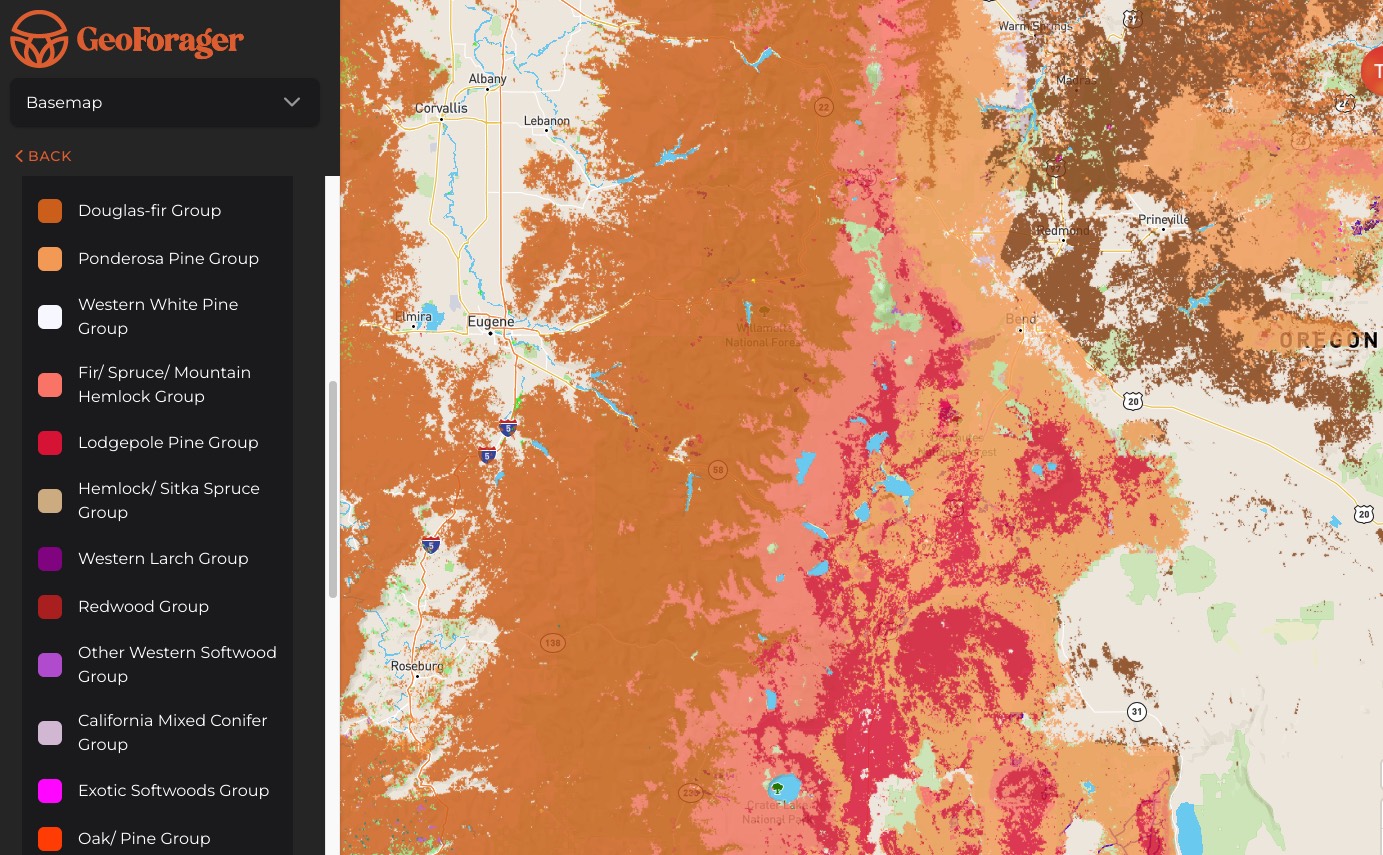
As burn morel hunters, we like to see a forest classified by their dominant tree, which ultimately is a different habitat for different species of mushrooms. Popular forest types we compare:
- Fir/Spruce
- Ponderosa Pine
- Douglas Fir
- Lodgepole Pine
All of these forest and tree species layers are available in the premium version of GeoForager maps which is $49.99 annually via subscription. Enjoy the maps in your web browser, iOS App or Android App.



1 thought on “Forest and Tree Species Maps”
Wow!! What a cool app!! Can’t wait to use this for my next foraging spot