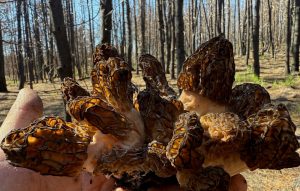

Soil temperature and soil moisture are essential factors relating to mushrooms – moisture determines IF they will grow, and temperature – WHEN they will grow. Morel hunters famously use soil temperature to determine when their quarry fruits. Likewise, soil moisture is a helpful map – especially when combined with precipitation maps – to find areas holding the most moisture.


You may ask “how are these maps are made?” They combine in-situ sensor data, with satellite remote sensing (microwave) with hydrologic models in a complex stew and then let AI sort it all out 🙂
We have noted that soil temps are notoriously un-reliable, even when collected by hand with thermometers, based on three factors:
- Depth: you have to measure at a consistent depth. The temp goes up or down dramatically as you push your thermometer deeper into the soil.
- Time of Day: the temperature goes up dramatically during the day, peaking in the afternoon.
- Sunshine (or aspect): the amount of sunshine landing on that single small spot of soil can really affect the reading. If you move the thermometer 12 inches away, to the north side of the tree, for example, the temperature can pop right up.
These three points make the argument for AI style maps, which will provide you with an average for an area. You can find warmer or cooler spots inside any region, simply by looking at sunnier spots, sunnier aspects, or at different times of day.